





Quick intro to Polymarket 15-minute markets
Polymarket 15-minute markets involve predicting real event outcomes in short timelines. For instance, you predict whether the price of Bitcoin will move up or down within a 15-minute window. The market uses a binary Yes/No structure to resolve trades.
For example, traders buy Yes contracts if they think the price of Bitcoin will reach a specified target, and No contracts if they think it won’t. Contracts are priced between $0.01 and $0.99 and have a fixed settlement value of $1 if the prediction hits, or $0 if it’s a miss.
Why traders are attracted to 15-minute markets
Instead of waiting days to find out if you have won or lost, you have your answer in minutes. That also means you can wedge in more trades per day. Short-term markets reduce the risk of market noise and manipulation. A lot can happen overnight, from regulatory announcements to an increase in inflation figures, dramatically shifting prices. Because you get immediate feedback on decisions, you can see how strategies perform and adjust more quickly.
Why do prices move so quickly
Polymarket 15-minute markets are highly volatile and typically limited to cryptocurrencies. These contracts usually track much smaller price movements, so while movement appears slow in the grand scheme of things, it’s a massive proportion. For example, BTC moving $0.10 in the next 15 minutes is insignificant to its year-end price, but a sudden 6c move at 10 minutes is massive.
Polymarket 15-minute markets are based on crypto
You can totally get daily contracts for financial markets like the S&P 500 and commodity prices like oil at prediction markets. But 15min markets at Polymarket are solely crypto-focused. In fact, when the market was introduced, it only dealt with Bitcoin and Ethereum movement contracts.
The site has since added XRP and other coins to the mix. For example, our Polymarket review mentions how you can predict whether the BTC price will go up or down in the next 15 minutes. You can also predict if the ETH price will move by a specific percentage.
| Contract Type | Example Market | What Stands Out |
|---|---|---|
| Bitcoin directional contract | Bitcoin Up or Down (6:45 AM–7:00 AM ET) | Usually attracts the highest liquidity, making entry and exit easier. |
| Ethereum directional contract | Ethereum Up or Down (3:00 PM–3:15 PM ET) | Often trades near 50/50 probabilities when no major catalyst is present. |
| Solana directional contract | Solana Up or Down (8:45 AM–9:00 AM ET) | Can be more volatile than Bitcoin due to lower liquidity. |
| XRP directional contract | XRP Up or Down (6:00 PM–6:15 PM ET) | Often most volatile in the last few minutes. |
Step-by-step guide to trading a 15-minute contract
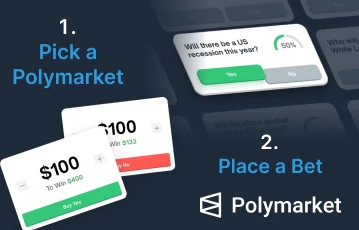
Placing 15-minute trades is actually pretty simple, even for first-timers. You just need to meet the Polymarket legal age of 18 years to sign up, and then follow these simple steps.
- Select a market and review the rules. As soon as you log in and unlock the Polymarket sign up bonus, pick a market. Carefully read and understand the contract question. Check the settlement conditions and resolution criteria outlined below the contract, checking how the market will resolve. Confirm the expiration time by tracking the countdown timer.
- Decide whether to buy Yes or No. When deciding whether to buy Yes or No, form a market view by looking at the prediction odds. But note that a 70% Yes contract, for example, is merely showing where other traders have already put their money. It’s not a prediction of how the event will play out. So be sure to consider available information and trends before you enter a position.
- Enter your position and confirm the trade. You can now choose your position size from the available price options. Polymarket shows how much you’ll win depending on your position size. Review the cost and confirm the order details.
- Manage the position until settlement. Polymarket 15-minute markets often have aggressive price fluctuations. Consider exiting early if you can lock in a return. You just need to wait for the settlement. We found that Polymarket settles and pays winning predictions within a few minutes of the 15-minute window closing and sometimes instantly.

Tips for improving your short-term trading decisions
The fast outcomes associated with Polymarket 15-minute markets can be both a blessing and a curse. You can’t guarantee outcomes, but these tips will help you trade with a bit of structure.
Focus on one market category
Being a Jack of all trades won’t help you much with 15-minute markets or even Polymarket 5 minute markets. Observe patterns and have a rule for when to enter and exit positions. This way, you avoid erratic and emotional trading.
Never risk too much on one contract
Avoid position sizing mistakes, where you spend most of your bankroll on a single contract. There’s power in diversification, as such a move limits volatility exposure and spreads risk. Intentional bankroll discipline is a must, and a good idea is not to spend more than 1-2% of your bankroll on a single position.
Keep emotions under control
Can you parlay on Polymarket? Yes, but don’t make emotional decisions to chase losses. The highly volatile nature of 15-minute prediction markets demands that you keep your emotions in check. We noticed that crowds in short-term markets are usually emotional and impatient, so we avoid being swayed by them. Stay disciplined, follow a plan, and avoid revenge trading when multiple resolutions don’t go your way.
Claim the Polymarket welcome bonus
Polymarket’s $50 welcome bonus is only triggered after completing all qualifying steps, not simply creating an account. New users must deposit at least $20 using a supported payment method and place their first qualifying trade before bonus funds are credited. Since many 15-minute contracts settle quickly, it’s also worth checking whether your chosen market qualifies for the promotion and whether any minimum trade size requirements apply before entering a position.
Polymarket 15-minute markets pros & cons
You don’t need to make complex analyses of the macroenvironment with 15-minute prediction markets, but they do run the risk of shallow liquidity. We’ve wrapped up the pros and cons below.
- Contracts resolve quickly
- No overnight exposure
- Increase trading opportunities daily
- Instant settlements
- Risk of massive slippage from early exits
Get quick feedback on trading
If patience has never been your strong suit when trading, Polymarket 15-minute markets are just what the doctor ordered. You’ll have your contracts resolved in just 15 minutes. These markets use simple Yes/No outcome structures, making them perfect for newbies. However, bear in mind that short-term prediction markets are highly volatile. Treat any contract price displayed as an indicator of where most traders have already put their money, not the guaranteed outcome.
Prices in short markets fluctuate heavily, and your best bet is to observe patterns before entering positions and always trade responsibly. You can click the banners on this page to sign up with the best sites in your region.
Polymarket 15-minute markets FAQ
What are Polymarket 15-minute markets?
15 Minute markets at Polymarket allow traders to speculate on crypto price movements within 15-minute windows. Contracts are settled within minutes of the contract expiring.
Are 15-minute markets riskier than longer-term markets?
Yes, 15-minute markets are marked by increased volatility, mostly driven by sentiment. News and macro crypto industry events have little bearing on what happens in 15-min cycles, so you have less chance to research and gain an edge.
Can you close a 15-minute position before settlement?
Yes, Polymarket allows you to exit your position early if you think it will make you lock in a return or minimize loss. Just ensure the market is liquid before your exit to reduce loss from bid/ask spreads.
What is the best Polymarket 15-minute market strategy for beginners?
The best strategy in 15-minute markets is always to start with fewer contracts and small position sizes and increase as you go. Take the time to learn about patterns and focus on understanding how market sentiment affects pricing. But even when using a strategy, remember that you can’t guarantee any result.