




Let’s start by explaining what a Kalshi event contract is
Kalshi event contracts let you trade on your predictions on real-world events. Here’s how they work.
The basic idea behind event contracts
Kalshi event contracts are linked to real-world event outcomes and pay out if your prediction is correct. Each contract is framed as a Yes/No question, so you choose Yes if you think the event will happen or No if you think it won’t. Outcomes and settlement rules are clearly defined before trading begins, so be sure to read the fine print. All settlements happen after the event outcome is confirmed.
Contract prices and probability estimates
Our Kalshi review mentions how contracts are priced between $0.01 and $0.99. The price represents the likelihood of a particular outcome and reflects the market’s perceived probability that the event will happen.
So, a $0.40 price means the market believes there’s a 40% chance the event will occur. Markets generally reflect collective expectations, so any change in market sentiment based on new information will shift the prices.
Contract expiry and settlement dates
Every contract has a deadline, but it’s not always a fixed calendar date. Sometimes, the contract expires once the event ends, e.g., when an election result is announced. In other cases, Kalshi determines the expiration date. Either way, the expiration rules, dates, and trading cut-off times are outlined below the event, so no one gets blindsided. We found that contracts are settled within 1 to 12 hours after the outcome is determined using official data sources.
How event contracts differ from traditional investments
Event contracts are different from traditional investments because you don’t own stocks, crypto, or commodities. The focus is purely on forecasting outcomes. So, you don’t have to own crypto and have to deal with wallet integrity or gas fees to simply hedge on BTC reaching a certain price next week or in the next 5 minutes.
Why Kalshi event contracts have become popular
Many traders are gravitating toward Kalshi event contracts because of their easy-to-understand format. You answer simple Yes-or-No questions, making them suitable for trading amateurs. Plus, you get to predict outcomes on a wide range of topics, so there’s something for everyone.
The flexibility of event contracts is another plus. You can choose a short or longer forecasting window based on your risk tolerance. The fact that you can’t lose more than you spend is the cherry on top, unlike leveraged stocks that can clear your entire capital.
The different Kalshi prediction markets available
You can trade on all sorts of real-world outcomes, from politics to sports, depending on what floats your boat. We’ve listed the most popular prediction markets below.
Politics and election contracts
If you’re clued up on law, regulations, and upcoming elections, check out Kalshi’s politics and elections markets. Here, you predict election winners like the Los Angeles mayoral election winner. Or, you can speculate on legislative developments like “Will the reconciliation bill pass the Senate?” This market also covers outcomes of political control and government-related events.
Economic and financial contracts
This market covers matters relating to financial and macroeconomic events. Pick this niche if you’re interested in things like interest rate decisions, GDP announcements, and employment data releases. Kalshi has a separate category for economics and finance. With the former, you can predict US prices this week or the inflation rate in May. Finance contracts can involve predicting Uber trips in Q2.
Cryptocurrency and digital asset contracts
Blockchain-savvy individuals can also predict the future of cryptocurrencies. This can look like predicting Bitcoin price milestones or Ethereum-related events. For example, you’re asked, “Will Bitcoin trade below $60k in May? This market also covers ETF approvals and broader crypto market developments, like whether OpenSea or Felix will launch a token this year.
Sports, culture, and specialty markets
This one is for sports lovers and fans of pop culture. You trade on outcomes for real sporting matches, like the team to win the European Championship. Kalshi has nearly 1,000 sporting events to predict on under various categories, including Props, Futures, and Win Totals.
There’s a separate category for culture predictions covering awards and entertainment events. You can predict events like “Will Drake have the top 3 albums on the Billboard 200?” Kalshi also has weather-related contracts if you’d like to predict the highest temperatures or rainfall probability.
| Market Category | What You Can Trade | Example Contract |
|---|---|---|
| Politics | Elections, legislation, government control | Will Donald Trump win the election? |
| Economics | Inflation, GDP, unemployment, interest rates | Will inflation exceed 3% this quarter? |
| Crypto | Bitcoin prices, ETF approvals, market milestones | Will Bitcoin reach $150,000 before 2027? |
| Sports | Championships, match outcomes, season achievements | Will the Chiefs win the Super Bowl? |
| Weather | Temperature, rainfall, storm activity | Will New York receive over 10 inches of snow this month? |
| Culture & Events | Awards, entertainment, public events | Will Drake win Album of the Year? |

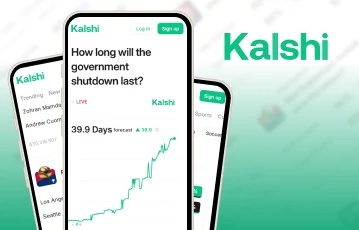
Here’s how you find different contract categories
We give kudos to the Kashi team for designing a user-friendly interface that makes it easy to identify different contracts.
Filter markets by topic
You’ll find the main prediction categories right at the top, displayed linearly, starting with trending markets. Thereafter, you can find categories for elections, politics, and sports, etc. Some categories, like sports, have subsections to help you narrow down your desired market. We found the search bar useful if there’s a market you’d like to jump to right away.
Use time frames to narrow choices
You can filter markets by timeline. Kalshi organizes contracts under daily markets that wrap up within 24 hours. Go for weekly opportunities or monthly markets based on your risk tolerance or informational edge. Annual markets are also an option if you’d like to hedge long-term risk.
Evaluate market activity
Before making a trade, be sure to evaluate the trading volume. For instance, high-volume markets are more liquid, allowing you to exit early without slippage. Also, check market participation levels and open interest indicators, such as tracking the number of outstanding or unsettled contracts.
Ready to trade? Here’s how to buy a Kalshi event contract
Once you establish where is Kalshi legal, buying an event contract on the site is easier than you think. If you’re based in Washington, our guide to is Kalshi legal in Washington state explains the current access rules in more detail.
We’ve outlined the steps below.
- Find a market that interests you: Whether you use a Kalshi referral code to log in or not, you can browse categories such as crypto, sports, politics, or economics to find what interests you. We suggest using the available filters to narrow down markets. From there, open the contract page and review the event question. Read the contract rules and settlement criteria stated at the bottom of the event page.
- Choose whether to buy Yes or No: Using your market knowledge, decide whether the event is likely to occur. Buy Yes if you think it will occur. Purchase No if you think it won’t. But before you do that, consider the implied probability before entering your position. Remember that a $0.55 price means the market thinks the event is slightly more than likely to happen.
- Select your trade size and confirm the order: Go ahead and purchase your contracts. Kalshi doesn’t limit the number of contracts you can buy, but your bankroll might. Review the contract price, check estimated costs, and potential payout before you trade. Our Kalshi fees explained guide found charges set at around 1.2% of the contract value. Submit the trade once you’re satisfied.
- Monitor your position after entry: Don’t place your trade and bolt, especially for short-term markets. Track probability and any changes in Kalshi prices. Also, follow the news to stay on top of any information that could impact the outcome. Use this data to make a fitting decision, which could be to sell before settlement or hold until resolution if your outlook remains unchanged.
What happens after you place a trade?
We mentioned that contract prices tend to fluctuate as crowd perception changes.
Managing open positions
Once you open your position, actively monitor price movements to decide your next move. Follow relevant news to anticipate real-time price changes instead of solely relying on market sentiment. Assess the changing probabilities and identify any mispriced contracts to help you decide whether to hold or exit.
Closing before settlement
Note that you don’t have to hold every position until expiry. You can sell your position early to lock in a guaranteed profit. If you come across new information you believe will weaken your trade position, it’s okay to exit early to limit losses. But consider market liquidity before you act. Exiting early only makes sense if the market is very liquid, so fees don't eat into your profit.
Waiting for settlement
If you decide to hold, you now must wait for Kalshi’s resolution process to play out. Once the contract expires, outcomes are determined using official outcome verification rules stated by Kalshi. This takes between 1 and 12 hours. Winning contracts are paid, and your balance is updated automatically.
Kalshi event contracts pros & cons
Kalshi event contracts are easy to use on a wide range of markets, but they aren’t free. Below is a summary of their pros and cons.
- Trade on several prediction markets
- Simple Yes/No outcomes
- Option to close position early
- You never lose more than you trade
- Variable trading fees
Kalshi Event contracts are above board
Kalshi is a regulated prediction exchange, where you can trade on outcomes for a wide range of markets, from politics to the weather. Event contracts use clear settlement rules governed by legal frameworks. You get transparent prices, pre-determined expiration dates, and fixed payout structures.
It’s important to understand pricing, contract rules, and settlement processes before you enter positions. You also need to know when to exit contract positions based on new information. You can click the banners on this page to sign up with the best sites available in your region and purchase your first event contract.
Kalshi event contracts FAQ
What are Kalshi event contracts?
Kalshi event contracts are tradeable outcomes on real-world events expressed as Yes/No predictions. Outcomes are settled using verifiable official data sources once the contract expires.
What types of events can I trade?
Kalshi has around 10 prediction markets covering political, economic, sports, and crypto events, among other categories. Pick a niche you have specialized knowledge in to increase your chances of making successful trades.
How are contract outcomes verified?
Contract outcomes are verified using official data sources. This can be a legal body, such as the Federal Reserve, or an adjudicator if there’s a dispute. We appreciate how Kalshi displays its resolution rules and settlement procedures on the site for each contract.