
The 10 Most Overrated Head Coaches in College Football History
Jesse M. Cox Published 02/08/2026

Calling a coach “overrated” does not mean he was unsuccessful. Every coach on this list accomplished something significant, and several won national championships. The question is whether the reputation matches the complete record.
Were these coaches consistently elite, or did one memorable season, one celebrated championship, or a prestigious job inflate how history remembers them? Statistics never tell the entire story, but neither should nostalgia. Championships, conference dominance, postseason performance, program trajectory and success against elite competition all matter.
Here are the ten most overrated head coaches in college football history.
10. Brian Kelly
Brian Kelly has won everywhere he has coached, but his career repeatedly demonstrated the difference between building a successful program and producing a truly dominant one.
Kelly established his reputation by winning two Division II national championships at Grand Valley State. He then elevated Central Michigan before transforming Cincinnati into a national contender. His 2009 Bearcats finished the regular season undefeated, but Kelly departed for Notre Dame before Cincinnati faced Florida in the Sugar Bowl. That decision left a lasting stain on an otherwise remarkable rebuilding job.
Kelly delivered consistent winning at Notre Dame, recording seven seasons with at least ten victories and reaching the 2012 national championship game. The problem was what happened whenever the Irish encountered the sport’s elite. Alabama destroyed Notre Dame 42–14 in the championship game. Clemson defeated Kelly’s Irish 30–3 in the 2018 College Football Playoff, and Alabama beat them 31–14 two years later.
Kelly then left Notre Dame for LSU before the 2021 season was finished. He reached the SEC Championship Game during his first season in Baton Rouge but never seriously threatened to win a national championship. LSU fired Kelly midway through the 2025 season with a 34–14 record after another expensive roster failed to meet championship expectations. He subsequently moved into broadcasting for the 2026 season.
Kelly was an excellent program builder and a highly successful coach. He was not the championship coach his reputation and contracts suggested.
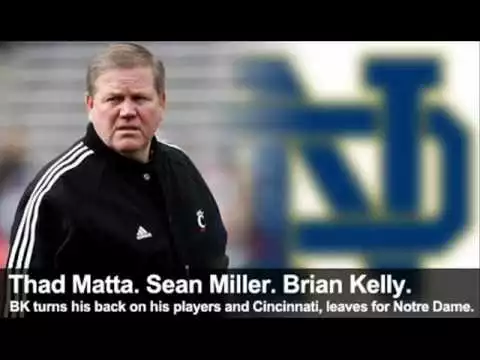
Brian Kelly stabs Cincinnati in the back
9. Tommy Tuberville
Tommy Tuberville’s supporters remember the undefeated 2004 Auburn team, his success against Alabama and his “Riverboat Gambler” personality. Those accomplishments deserve recognition, but they also obscure a career filled with inconsistency.
Tuberville coached for 21 seasons at Ole Miss, Auburn, Texas Tech and Cincinnati, finishing 159–99. His greatest accomplishment came in 2004, when Auburn went 13–0, won the SEC championship and defeated Virginia Tech in the Sugar Bowl. The Tigers were denied an opportunity to play for the BCS national championship, and Tuberville deserves credit for producing a team capable of competing with anyone.
However, that was Tuberville’s only conference championship in ten seasons at Auburn. His teams won or shared five SEC West titles, but he also produced four seasons with at least five losses. Auburn collapsed to 5–7 in 2008, one year after going 9–4, and Tuberville resigned.
His later stops weakened his legacy. Tuberville went 20–17 at Texas Tech, including only 9–17 in Big 12 games. He abruptly left the program for Cincinnati, where he finished 29–22. The Bearcats shared the 2014 American Athletic Conference championship but steadily declined, bottoming out at 4–8 in 2016.
Tuberville was 7–6 in bowl games and won more than 61 percent of his games. That is a good career, but outside of one magnificent season, his résumé does not support treating him as one of the defining coaches of his era.
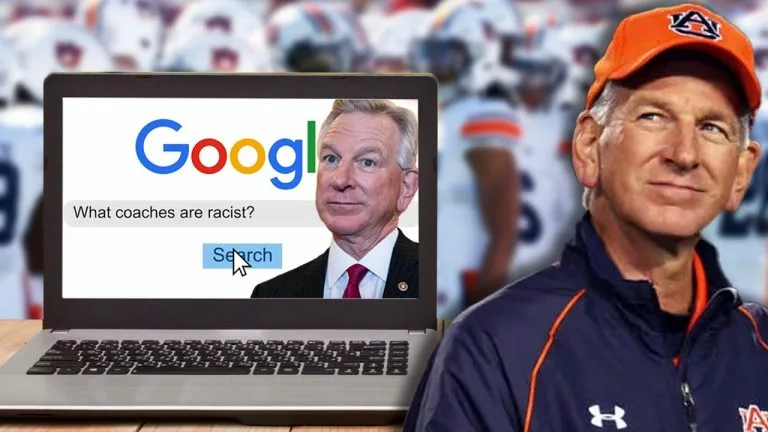
Tommy Tuberville and other racist college football coaches | Google is Free
8. Lloyd Carr
Lloyd Carr was a very good coach at Michigan. He won a national championship, five Big Ten titles and more than 75 percent of his games. However, the reverence surrounding his tenure sometimes ignores how frequently Michigan fell short during an era when the program possessed every conceivable advantage.
Carr finished 122–40 in 13 seasons. His 1997 team went undefeated and won the Associated Press national championship, although Michigan shared the overall national-title spotlight with unbeaten Nebraska, which finished first in the coaches poll.
The Wolverines remained nationally relevant under Carr, but they rarely sustained championship-level dominance. Only two of Carr’s five Big Ten championships were outright titles. Michigan went 5–7 in bowl games, 1–3 in BCS bowls and 1–4 in the Rose Bowl.
His record against Ohio State also deteriorated at the worst possible time. Carr won five of his first six games against the Buckeyes but lost six of his final seven, including four consecutive losses to Jim Tressel. Michigan’s inability to control its greatest rivalry helped shift the balance of power in the Big Ten.
Then came Appalachian State. Michigan entered the 2007 season ranked fifth and dreaming about a national championship, only to lose 34–32 to an FCS opponent at Michigan Stadium. The Wolverines recovered and defeated Florida in Carr’s final game, but the Appalachian State loss became one of the greatest upsets in sports history.
Carr belongs in Michigan history. He simply was not as consistently dominant as his overall record and 1997 championship sometimes make him appear.
Hey Fuck Lloyd Carr
7. Charlie Weis
Charlie Weis might be the clearest example of an inflated reputation creating expectations that actual performance could never satisfy.
Notre Dame hired Weis after he helped the New England Patriots win three Super Bowls as an offensive coordinator. He arrived in South Bend carrying the label of an offensive genius and quickly appeared to justify the hype. With quarterback Brady Quinn leading the offense, Notre Dame reached major bowl games in each of Weis’ first two seasons.
Both games exposed the gap between perception and reality. Ohio State defeated Notre Dame 34–20 in the Fiesta Bowl, and LSU embarrassed the Irish 41–14 in the Sugar Bowl. Notre Dame then collapsed after Quinn’s departure, finishing 3–9 in 2007.
Weis never recovered. The Irish went 7–6 in 2008 and 6–6 in 2009, leaving him with a 35–27 record across five seasons. Notre Dame was 16–21 over his final three years and never won a bowl against a major opponent during his tenure.
His disastrous Kansas tenure eliminated any remaining argument that Notre Dame was solely responsible for his struggles. Weis went 1–11 in 2012, 3–9 in 2013 and lost the first four games of 2014 before being fired. His final record with the Jayhawks was 6–22, including 1–18 in Big 12 games.
Weis was a successful NFL coordinator whose reputation as an offensive mastermind exceeded his ability to construct and manage a college program. His career is a reminder that coordinating elite professional players and leading an entire college organization are completely different jobs.
Charlie Weis injury
6. R.C. Slocum
R.C. Slocum is the winningest coach in Texas A&M history and an important figure in the program’s development. Nevertheless, his 14-year tenure became the story of a team that was consistently good without becoming nationally elite.
Slocum finished 123–47–2 at Texas A&M and never had a losing season. His Aggies won three consecutive Southwest Conference championships from 1991 through 1993 and added another in 1994. Texas A&M went undefeated in 1994 but was ineligible for the conference championship and postseason because of NCAA sanctions.
The Aggies dominated the declining Southwest Conference, but postseason results raised questions about how they compared with the country’s best teams. Texas A&M lost the Cotton Bowl after the 1991, 1992 and 1993 seasons. Slocum’s teams went only 3–8 in bowls and never finished higher than seventh in the final AP poll.
Texas A&M joined the Big 12 in 1996 and won the conference championship in 1998, upsetting second-ranked Kansas State in overtime. That was Slocum’s signature victory, but the Aggies followed it by losing 24–14 to Ohio State in the Sugar Bowl.
Slocum was reliable, respected and successful. He built excellent defenses and kept Texas A&M nationally relevant during a period of considerable change. However, the Aggies never finished in the top five, never played for a national championship and struggled in major bowl games.
That makes Slocum a good coach whose reputation occasionally exceeds the national results he actually produced.
5. Gene Stallings
Gene Stallings coached one of the greatest teams in Alabama history. His 1992 Crimson Tide went 13–0, defeated heavily favored Miami 34–13 in the Sugar Bowl and won the national championship. That accomplishment alone guarantees Stallings an important place in college football history.
The question is how much one extraordinary season should influence the evaluation of an entire career.
Before Alabama, Stallings coached Texas A&M for seven seasons and finished 27–45–1. His Aggies produced only one winning season, going 7–4 in 1967 and defeating Alabama in the Cotton Bowl. Texas A&M fired him after the 1971 season.
Stallings was much more successful at Alabama, posting an unofficial on-field record of 70–16–1 from 1990 through 1996. The Crimson Tide won the 1992 SEC championship and four SEC West titles. Stallings was also outstanding in bowl games, going 6–1.
However, his official Alabama record was reduced after the 1993 team forfeited eight wins and one tie because star defensive back Antonio Langham had signed with an agent and was therefore ineligible. Alabama received probation, scholarship reductions and a postseason ban. Stallings was not personally found to have orchestrated the violation, so it would be unfair to place the entire scandal on him, but it happened under his leadership.
Stallings was excellent at Alabama and terrible at Texas A&M. He deserves tremendous credit for 1992, but ranking him among the greatest coaches ever requires overlooking nearly half of his college head-coaching career.
Back When Alabama Was TERRIBLE at Football
4. Johnny Majors
Johnny Majors was an outstanding rebuilder. He inherited struggling programs at Iowa State, Pittsburgh and Tennessee and made all three substantially better. His weakness was maintaining elite success after completing the rebuilding process.
Majors finished 185–137–10 over 29 seasons. He took Iowa State to its first two bowl games and then resurrected Pittsburgh, producing a 12–0 national championship season in 1976. Led by Tony Dorsett, the Panthers overwhelmed opponents and defeated Georgia 27–3 in the Sugar Bowl.
Majors immediately left Pitt for Tennessee, his alma mater. The Volunteers were coming off four consecutive seasons without more than seven victories, and Majors eventually rebuilt them into an SEC contender. Tennessee won or shared conference championships in 1985, 1989 and 1990.
The overall results were less overwhelming. Majors went 116–62–8 at Tennessee, but his first eight teams lost at least four games apiece. Even after the program improved, the Volunteers frequently followed strong seasons with disappointing ones. Tennessee forced Majors out during the 1992 season, with offensive coordinator Phillip Fulmer replacing him and eventually taking the program to a higher level.
Majors returned to Pittsburgh but could not recreate his earlier success, going 12–32 from 1993 through 1996.
Winning a national championship and three SEC titles is an impressive legacy. Yet Majors finished fewer than four games above .500 outside his 1976 championship season and three SEC-title seasons. He was a transformative coach, but not a consistently dominant one.
Tennessee's Johnny Majors Tribute Video
3. Vince Dooley
Vince Dooley is Georgia’s winningest coach, compiling a 201–77–10 record over 25 seasons. His teams won six SEC championships, appeared in 20 bowl games and captured the 1980 national championship. Those numbers explain why Dooley remains beloved in Athens.
They do not necessarily prove that he belongs among college football’s greatest coaches.
Dooley’s championship peak depended heavily on Herschel Walker, one of the most dominant players in the sport’s history. Georgia went 43–4–1 during Walker’s three seasons, winning three SEC championships and the 1980 national title. Once Walker left for professional football, the Bulldogs never won another conference championship under Dooley.
Georgia remained competitive, but the program gradually receded from the national-title picture. The Bulldogs finished unranked in four of Dooley’s final six seasons. Despite the school’s location in a talent-rich state and its considerable resources, Georgia did not become the sustained national power that Alabama had been under Bear Bryant.
Calling Dooley ordinary would go too far. He produced only one losing season, defeated Georgia Tech 19 times and won more than 70 percent of his games. His longevity and consistency were legitimate accomplishments.
The overrated part comes when Dooley is placed alongside coaches who built dynasties or repeatedly competed for national championships. His résumé is built around one spectacular four-year period from 1980 through 1983. Outside that window, Georgia was generally good but rarely great.
Dooley was a Hall of Fame coach and an important figure in Georgia history. He was not an all-time coaching titan.
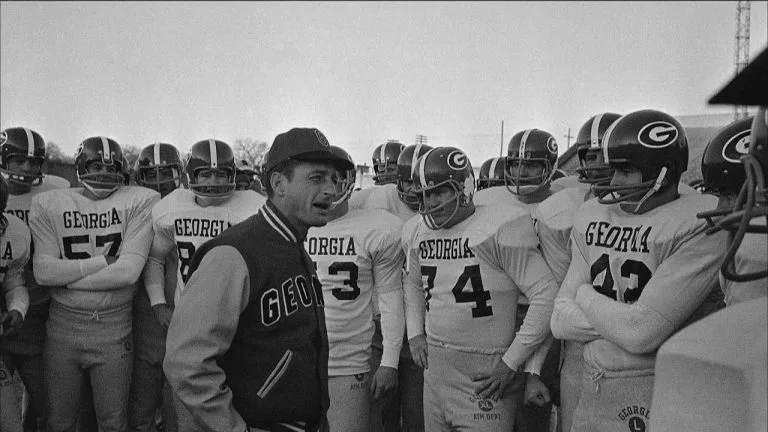
Far beyond football | Vince Dooley's legacy at UGA
2. Charles McClendon
Charles McClendon won 137 games at LSU and kept the Tigers competitive for nearly two decades. He coached several outstanding teams and was inducted into the College Football Hall of Fame. Nevertheless, his championship record falls short of his lofty historical reputation.
McClendon coached LSU from 1962 through 1979, finishing 137–59–7. His Tigers appeared in 13 bowl games, produced seven AP top-ten finishes and endured only one losing season. That consistency deserves respect.
However, McClendon won only one SEC championship in 18 seasons. That title came in 1970, when LSU went 9–3 before losing 17–12 to Nebraska in the Orange Bowl. The Tigers finished seventh in the final AP poll, their highest finish under McClendon.
LSU’s inability to defeat Alabama became the defining limitation of his tenure. McClendon went 2–14 against Bear Bryant, including an 11-game losing streak from 1971 through 1979. Competing with Bryant was difficult for everyone, but winning championships in the SEC required finding a way past Alabama. McClendon almost never did.
His teams were often defensively sound and difficult to beat, but they were rarely the best team in their conference and never seriously approached a national championship. LSU eventually informed McClendon that the 1979 season would be his last.
McClendon was a good coach who represented LSU with dignity. But 18 seasons, one conference title and no top-five finishes do not support placing him among the truly elite coaches in SEC history.
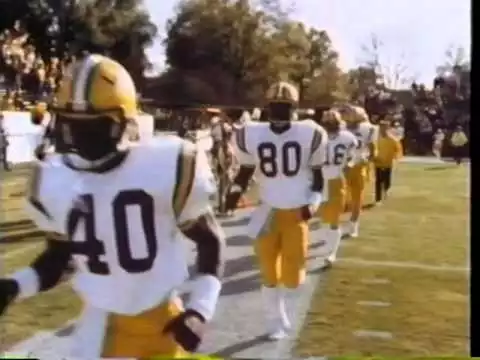
LSU football highlights 1970-82
1. Bobby Ross
Bobby Ross reached impressive heights, including three consecutive ACC championships at Maryland and a share of the 1990 national championship at Georgia Tech. The problem is that those highlights were surrounded by lengthy stretches of mediocrity.
Ross began his head-coaching career at The Citadel, where he went 24–31. After working as an NFL assistant, he returned to college football at Maryland and inherited a program shaken by the death of Len Bias and the departure of Jerry Claiborne.
His Maryland tenure produced his most sustained success. The Terrapins won three consecutive ACC championships from 1983 through 1985 and finished 9–3 in each of those seasons. However, Ross’ final Maryland team slipped to 5–5–1.
At Georgia Tech, Ross went 2–9 and 3–8 during his first two seasons before completing a remarkable turnaround. The 1990 Yellow Jackets finished 11–0–1, defeated Nebraska in the Citrus Bowl and won the coaches-poll national championship. Yet Georgia Tech went 8–5 the following year, and Ross left for the NFL with a modest 31–26–1 record at the school.
After coaching the San Diego Chargers and Detroit Lions, Ross returned to college football at Army. He went 9–25 across three seasons, never winning more than four games.
Ross’ final college record was 103–101–2. He deserves credit for the 1990 championship and his Maryland run, but a coach who spent most of his career hovering near .500 should not be remembered as consistently elite. Ross produced isolated moments of greatness, not sustained excellence.
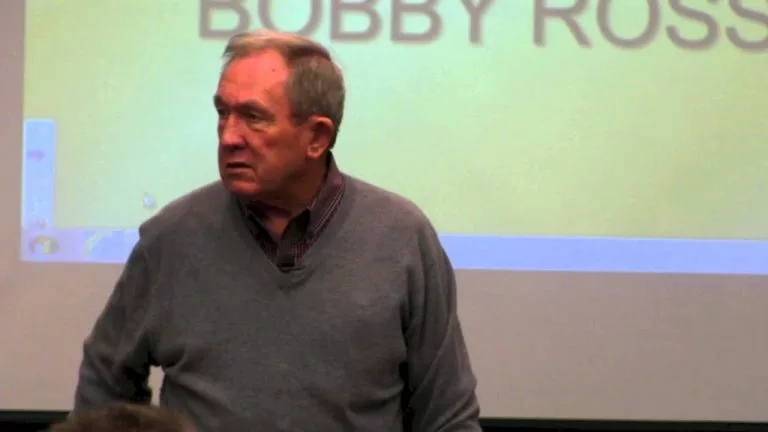
Former NFL Head Coach Bobby Ross on Character
Honorable Mentions
Rich Rodriguez
Rich Rodriguez built West Virginia into a national contender and nearly took the Mountaineers to the 2007 national championship game. His innovative spread-option offense influenced the sport, but his later results never matched his reputation.
Rodriguez went 15–22 at Michigan, producing the first two losing seasons in the program since 1967. He later experienced moderate success at Arizona, highlighted by a Pac-12 South championship in 2014, but never won another conference title. His tactical influence is undeniable, yet his standing as an elite program builder was based primarily on one highly successful stop.
Les Miles
Les Miles went 114–34 at LSU, won the 2007 national championship and reached another championship game in 2011. Those accomplishments make him more successful than most coaches who have ever entered the profession.
However, Miles inherited a program Nick Saban had already built into a national power. His poor clock management became notorious, and LSU’s offense increasingly failed to evolve. After starting 5–0 against Alabama, Miles lost his final five meetings with the Crimson Tide. His disastrous 3–18 tenure at Kansas further damaged his reputation.
Miles was successful, but LSU’s enormous talent base often concealed his limitations.
Kirk Ferentz
Kirk Ferentz deserves enormous credit for producing sustained success at Iowa, a program without the recruiting advantages enjoyed by Ohio State, Michigan or Penn State. He has won multiple Big Ten championships and developed countless NFL players.
The criticism concerns Iowa’s chronic offensive incompetence. Ferentz promoted his son, Brian, to offensive coordinator despite consistently poor production. The 2023 Hawkeyes won ten games and reached the Big Ten Championship Game even though their offense finished last nationally in yards per game. Eventually, Iowa declined to retain Brian Ferentz as offensive coordinator.
Kirk Ferentz is a tremendous defensive program builder, but Iowa’s refusal to modernize offensively prevented several excellent teams from becoming legitimate national contenders.