
Caitlin Clark Was the Worst Thing to Happen to the WNBA—Because She Exposed Everything

Jesse M. Cox Published 09/08/2026

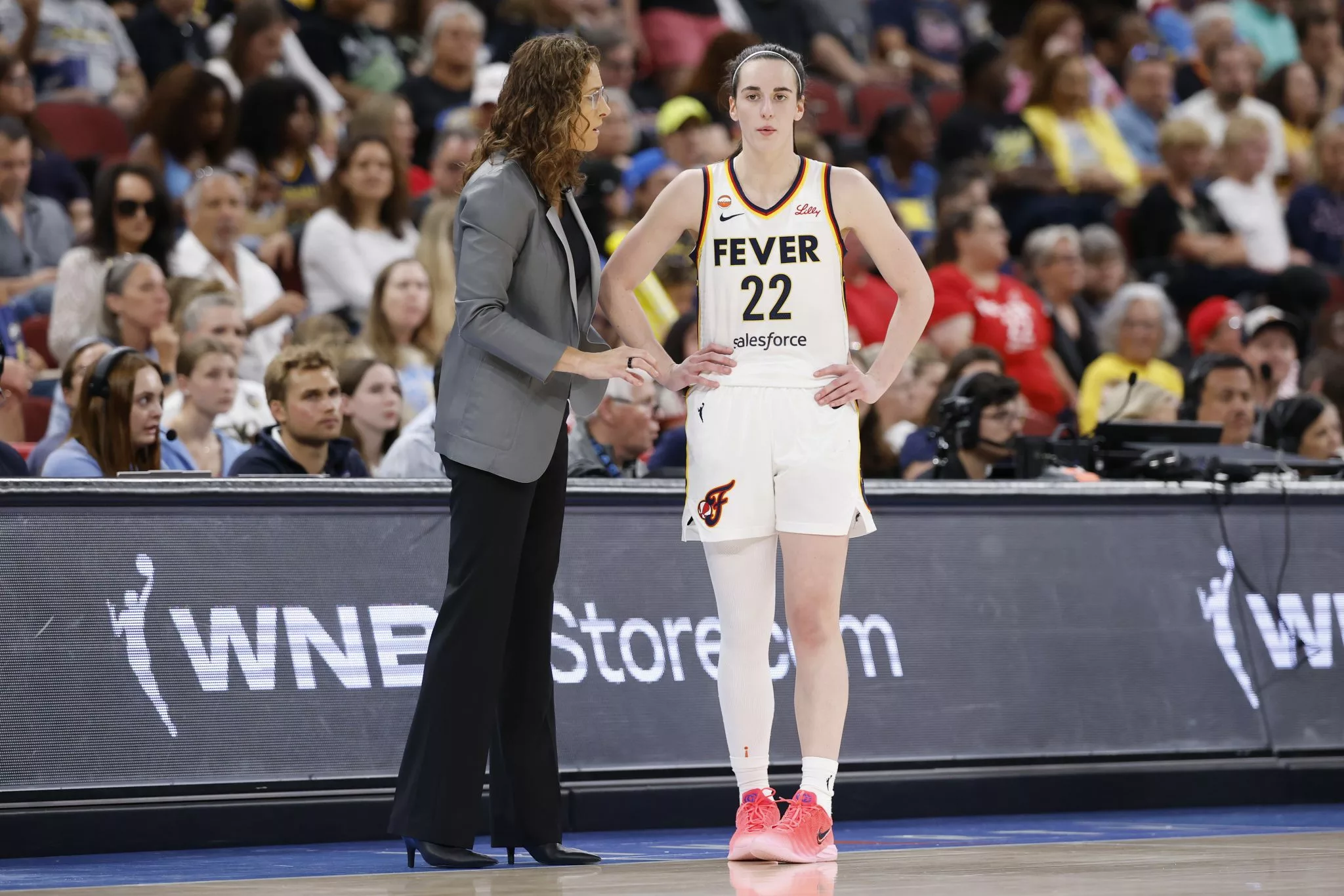
Caitlin Clark is the best thing that ever happened to the WNBA’s business. She is also the worst thing that ever happened to the comfortable illusion the league had constructed around itself.
Before Clark arrived, the WNBA operated largely outside mainstream scrutiny. Its loyal audience admired the players, celebrated the league’s social activism and accepted its financial structure without demanding many answers. Most American sports fans, however, paid little attention.
That anonymity protected the WNBA.
It allowed the league to present itself as an established major professional sports organization without confronting the uncomfortable reality that it had reportedly operated at a loss for most of its existence. It allowed players and league officials to emphasize politics, representation and cultural influence without facing sustained questions about television ratings, attendance, market demand or financial independence.
Then Clark arrived and brought millions of new customers with her.
Suddenly, people were watching. They noticed the empty seats, obscure television windows, small salaries, limited charter travel and financial dependence upon NBA-connected capital. They also noticed the political culture, double standards, resentment and astonishing inability of some people surrounding the league to embrace the player creating its greatest commercial opportunity.
Clark did not cause those problems.
She exposed them.
The WNBA Was Created by the NBA
The WNBA’s financial dependence is not a conspiracy invented by its critics. The league was created by the NBA.
On April 24, 1996, the NBA Board of Governors approved the formation of the Women’s National Basketball Association. Play began in June 1997 with eight teams, national television arrangements and the promotional power of the established men’s league behind it.
There is nothing inherently shameful about that origin. New sports leagues require capital, infrastructure and patience. The NBA’s involvement gave elite women’s basketball players an opportunity that previous professional leagues could not sustain.
The problem is the mythology that developed afterward.
The WNBA wanted to be treated like a fully established major professional league while its economics remained dramatically different from those of the NBA, NFL, Major League Baseball or NHL. It demanded comparisons in salary and cultural importance without welcoming comparisons in revenue, ratings, attendance or profitability.
NBA commissioner Adam Silver said in 2018 that the WNBA had lost an average of more than $10 million annually. Reports indicated that the league was expected to lose approximately $40 million to $50 million during its record-setting 2024 season.
The precise accounting remains disputed because the WNBA does not publicly release detailed financial statements. Critics of the reported losses argue that shared expenses, investment spending and accounting decisions can make a growing business appear less profitable.
That lack of transparency is part of the problem.
If the WNBA wants to reject the description of a subsidized league, it should open its books and prove otherwise.
Calling It a “Welfare League” Is Harsh—but the Underlying Question Is Fair
“Welfare league” is an intentionally inflammatory description. It is also how critics characterize a sports organization that reportedly could not have survived nearly three decades without outside financial support.
WNBA supporters understandably reject the label. They argue that nearly every emerging business loses money while attempting to build scale. The NBA itself struggled during portions of its history, while numerous technology and entertainment companies operated at losses for years.
That argument is reasonable.
What is not reasonable is pretending that financial dependence and financial independence are the same thing.
The WNBA survived because the NBA and its owners believed women’s professional basketball deserved time, promotion and investment. NBA-associated owners reportedly retain a major portion of the league, while WNBA owners and outside investors hold the remainder.
That arrangement provided enormous advantages: arena access, league administration, broadcast relationships, marketing assistance and the credibility of the NBA brand.
The WNBA was not required to survive a pure market test. It was protected while attempting to build one.
Again, that investment may ultimately prove worthwhile. Franchise valuations, expansion fees and media rights are now rising dramatically.
But before Clark, the league too often wanted public credit for its existence without acknowledging who paid to sustain that existence.
Clark made that contradiction impossible to ignore.
Before Clark, Most Sports Fans Simply Did Not Care
The WNBA possessed outstanding players long before Caitlin Clark.
Sheryl Swoopes, Cynthia Cooper, Lisa Leslie, Lauren Jackson, Diana Taurasi, Sue Bird, Candace Parker, Maya Moore, Breanna Stewart and A’ja Wilson all produced championship careers. Knowledgeable basketball fans understood their greatness.
The broader public remained mostly indifferent.
That is not an insult to those players. It is a description of consumer behavior.
Most WNBA games generated limited audiences compared with America’s major men’s leagues. Many teams played in partially filled arenas. Sports talk programs devoted little time to the league outside the playoffs, social controversies or occasional highlight packages.
The WNBA had passionate supporters, but it did not possess a large national customer base.
That allowed its internal culture to develop without much outside pressure. Players could criticize fans, fight publicly with commentators or prioritize political advocacy because the league was speaking primarily to an audience that already shared its values.
There was no significant cost to alienating people who were not watching anyway.
Clark changed that equation. She brought in millions of viewers who had no previous emotional investment in the WNBA and did not automatically accept its culture.
The league was no longer performing only for its existing community. It was being judged by the general sports marketplace.
Clark Brought Customers, Not Just Attention
Clark’s impact cannot be dismissed as social-media hype.
The 2024 WNBA Draft averaged 2.45 million viewers and peaked above three million, making it the most-watched WNBA draft in history. Merchandise sales increased 236 percent during the opening portion of the season, with Clark, Angel Reese and Cameron Brink among the leading jersey sellers.
The league finished 2024 with record television audiences, merchandise activity and engagement. Average attendance rose sharply, while several teams moved games involving Indiana into larger arenas.
Clark’s return from injury in June 2025 produced an average audience of 2.2 million viewers on ABC, peaking at 2.8 million. It became ESPN’s third-most-watched WNBA game ever on ABC.
When Clark missed games, audiences frequently declined. When she returned, they surged.
By 2025, the WNBA broke its single-season attendance record with weeks remaining, drawing more than 2.5 million fans. Clark was not solely responsible—other rookies, established stars and successful franchises contributed—but the commercial explosion began with her arrival.
Clark did what the WNBA had been trying to accomplish since 1997: she created widespread consumer demand.
She Exposed the Difference Between Popularity and Activism
For years, the WNBA received significant media praise for being politically active.
Players wore social-justice messages, supported Black Lives Matter and became involved in voting campaigns. The league celebrated that identity rather than separating activism from its basketball product.
The clearest example came in 2020, when Atlanta Dream players publicly supported Raphael Warnock in his Senate campaign against Republican incumbent Kelly Loeffler, who was then a co-owner of the Dream. Players from multiple teams wore “VOTE WARNOCK” shirts before nationally televised games.
Supporters praised the players for using their platform. They were entitled to do so.
But the league could not spend years blending basketball with progressive politics and then act shocked when new customers arrived with different political views—or no interest in politics at all.
Clark’s fan base included Midwestern families, Iowa supporters, casual basketball viewers and people who had never watched a WNBA game. It was much broader and less ideologically uniform than the league’s traditional audience.
That collision exposed a critical distinction.
Political relevance is not the same as commercial popularity.
The WNBA had become influential within particular media and activist communities, but that did not mean millions of Americans wanted to purchase tickets, watch games or buy merchandise.
Clark delivered the customers. Their arrival revealed how narrow the league’s previous cultural appeal had become.
The League Wanted New Fans—Just Not All Their Opinions
The WNBA spent years asking for more coverage, more investment and more respect. Clark provided all three.
The response too often sounded like resentment.
New fans were lectured about not appreciating the league’s history. Commentators complained that established stars were being ignored. Every hard foul, interview answer and television rating became part of a racial or political argument.
Some criticism was justified. Clark’s popularity did attract bad-faith actors who used her as a weapon against Black or gay players. Online harassment directed at WNBA athletes was real and unacceptable.
But that fact was sometimes used to dismiss legitimate criticism of the league. Anyone questioning officiating, physical treatment, marketing decisions or political messaging risked being grouped with trolls and bigots.
That is not how a growing sports business should treat customers.
New NFL fans are not required to complete a history course before buying tickets. New NBA viewers are not told their opinions are invalid because they cannot name every great player from the 1980s.
The WNBA wanted expansion without disruption. It wanted Clark’s audience, television numbers and ticket revenue without accepting that millions of new consumers would evaluate the league differently.
That was never realistic.
Clark Exposed the League’s Marketing Failure
The WNBA had stars before Clark, but it did not market them effectively enough to a broad audience.
That failure cannot be blamed entirely on sexism or insufficient media coverage. Those factors mattered, but sports organizations must create compelling products and sell them.
The WNBA frequently marketed itself through obligation. Fans were told they should support women’s sports, should respect the players and should care about equality.
Clark’s appeal worked differently.
People watched because they wanted to see her play.
Her shooting range, passing creativity, competitive personality and history at Iowa created genuine entertainment value. She did not require viewers to treat attendance as a political statement or charitable contribution.
That is what professional sports ultimately needs: voluntary consumer demand.
Clark demonstrated that millions of Americans were willing to support women’s basketball when presented with a compelling star and meaningful story. That should have caused the WNBA to examine why it had failed to create comparable mainstream connections around previous stars.
Instead, much of the public conversation focused on whether Clark was receiving too much attention.
That reaction exposed a league more comfortable policing recognition than maximizing it.
The Salary Debate Became More Complicated
Clark’s rookie salary became one of the most discussed numbers in American sports.
Many people were outraged that the No. 1 draft choice and biggest commercial force in women’s basketball earned less than $80,000 from her WNBA contract. The figure appeared absurd when compared with NBA rookie salaries.
But salaries are not determined by moral worth. They are determined by collective bargaining, league revenue and market economics.
Clark made the WNBA more valuable, yet she entered under a compensation system negotiated before anyone anticipated her impact. Her endorsement income reflected her true market power far more accurately than her rookie contract did.
Her arrival also intensified questions about revenue sharing. Players understandably demanded a larger portion of the league’s growth, particularly with the new media agreement reportedly worth approximately $200 million per year beginning with the new broadcast cycle.
Clark therefore exposed both sides of the financial argument.
The league could no longer claim poverty while celebrating record growth, franchise valuations and expansion fees. Players also could not demand NBA-level salaries without acknowledging the massive difference between NBA and WNBA revenue.
The conversation finally became about real economics rather than slogans.
The New Media Agreement Is Progress—But It Also Proves the NBA’s Importance
The WNBA’s new media agreement is reportedly worth roughly $2.2 billion over 11 years, averaging approximately $200 million annually. That represents an enormous increase and could fundamentally change the league’s future.
It is also connected to the NBA’s larger media negotiations.
The WNBA benefited from being packaged alongside an enormously valuable sports property with long-standing relationships across Disney, NBCUniversal and Amazon.
That does not make the WNBA’s agreement illegitimate. It does demonstrate once again that the league’s relationship with the NBA remains economically essential.
Clark arrived at the perfect moment. Her popularity gave networks evidence that women’s professional basketball could draw larger audiences, while the NBA’s negotiating power helped convert that interest into a long-term agreement.
The WNBA may eventually become financially independent. Expansion fees and rapidly rising franchise valuations suggest investors believe that possibility is real.
But a league approaching independence should not rewrite the history of how it survived long enough to reach this moment.
The NBA provided the bridge. Clark created the traffic.
Politics Was Not Always Literally First—but It Often Became the Brand
It would be inaccurate to say every WNBA player or every league decision prioritized politics over basketball. Most players spent their careers trying to win games, develop their skills and earn a living.
The WNBA has also produced excellent basketball and memorable championship series.
But politically progressive activism became an unusually prominent component of the league’s public identity. Media outlets celebrated the WNBA as much for its politics as for its competition. Players were frequently described as activists first and athletes second.
That strategy strengthened loyalty within one portion of the audience but limited broader appeal.
Sports can never be completely separated from politics. National anthems, public funding for arenas, labor negotiations and cultural representation all carry political meaning.
The question is whether a league invites everyone to enjoy the game or communicates that ideological agreement is part of admission.
Clark brought fans who wanted basketball first. The WNBA’s difficulty accommodating them revealed how deeply activism had become embedded in its culture.
The league is now discovering that political applause cannot substitute for ticket buyers, television viewers and consumers.
Clark Was “Bad” for the People Comfortable With the Old WNBA
Clark was not bad for players receiving charter flights, larger audiences and increasing salaries.
She was not bad for owners watching franchise values rise.
She was not bad for networks selling advertisements around larger television audiences.
She was not bad for young girls seeing a women’s basketball player become one of America’s most recognizable athletes.
She was bad for anyone comfortable with the old arrangement.
Before Clark, the WNBA could blame limited coverage for limited popularity. After Clark, the league received unprecedented coverage—and every weakness became visible.
Before Clark, it could argue that Americans simply refused to support women’s basketball. Clark proved millions would support it.
Before Clark, financial losses were discussed mostly by critics. After Clark, the contradiction between record growth and continued reported losses became a mainstream business question.
Before Clark, the league’s political culture faced little resistance because its audience was relatively self-selecting. Clark introduced millions of consumers who did not share the same assumptions.
She removed every convenient excuse.
The League’s Future Depends on What It Learned
The WNBA now faces a choice.
It can treat Clark’s popularity as an invasion, continue resenting the attention and dismiss new fans whenever they challenge the league’s established culture.
Or it can recognize that mainstream relevance inevitably brings scrutiny, disagreement and change.
The league should continue protecting players from genuine harassment. It should also distinguish harassment from criticism.
It should celebrate established stars without pretending Clark’s drawing power is ordinary.
It should allow players to express political opinions without making one political worldview feel like the league’s official membership requirement.
Most importantly, it should become transparent about its finances. A league demanding increased investment and public respect should clearly explain its revenue, expenses, ownership and relationship with the NBA.
The WNBA has an opportunity to become a sustainable major sports league. Expansion, media rights and franchise valuations suggest its future is brighter than ever.
But sustainability requires customers, not just supportive institutions and favorable commentary.
Clark brought those customers.
Conclusion
Caitlin Clark was not the worst thing to happen to the WNBA’s future. She may ultimately be the person who made that future possible.
She was the worst thing to happen to the WNBA’s excuses.
Her arrival exposed a league that had survived through NBA backing and patient outside investment. It exposed the difference between cultural praise and consumer demand. It revealed how political activism had become intertwined with the league’s identity and how unprepared some people were for an audience that did not share that identity.
It also exposed something more encouraging: Americans will watch women’s basketball when they find the product compelling.
The WNBA was not invisible because women’s sports could never succeed. It was invisible because the league had not created enough mainstream demand.
Clark changed that almost immediately.
She did not ask the WNBA to become a national culture-war battlefield. She simply played basketball well enough to make millions of people care.
Once they cared, they started looking closely.
What they found was a league with exceptional athletes, real growth and enormous potential—but also weak historical economics, dependence on NBA-connected support, political baggage and a troubling tendency to resent the very attention it had spent decades requesting.
Caitlin Clark did not damage the WNBA.
She turned on the lights.