
Who was the Greatest Baseball Player Ever? Barry Bonds or Babe Ruth

David Genge Published 05/07/2026

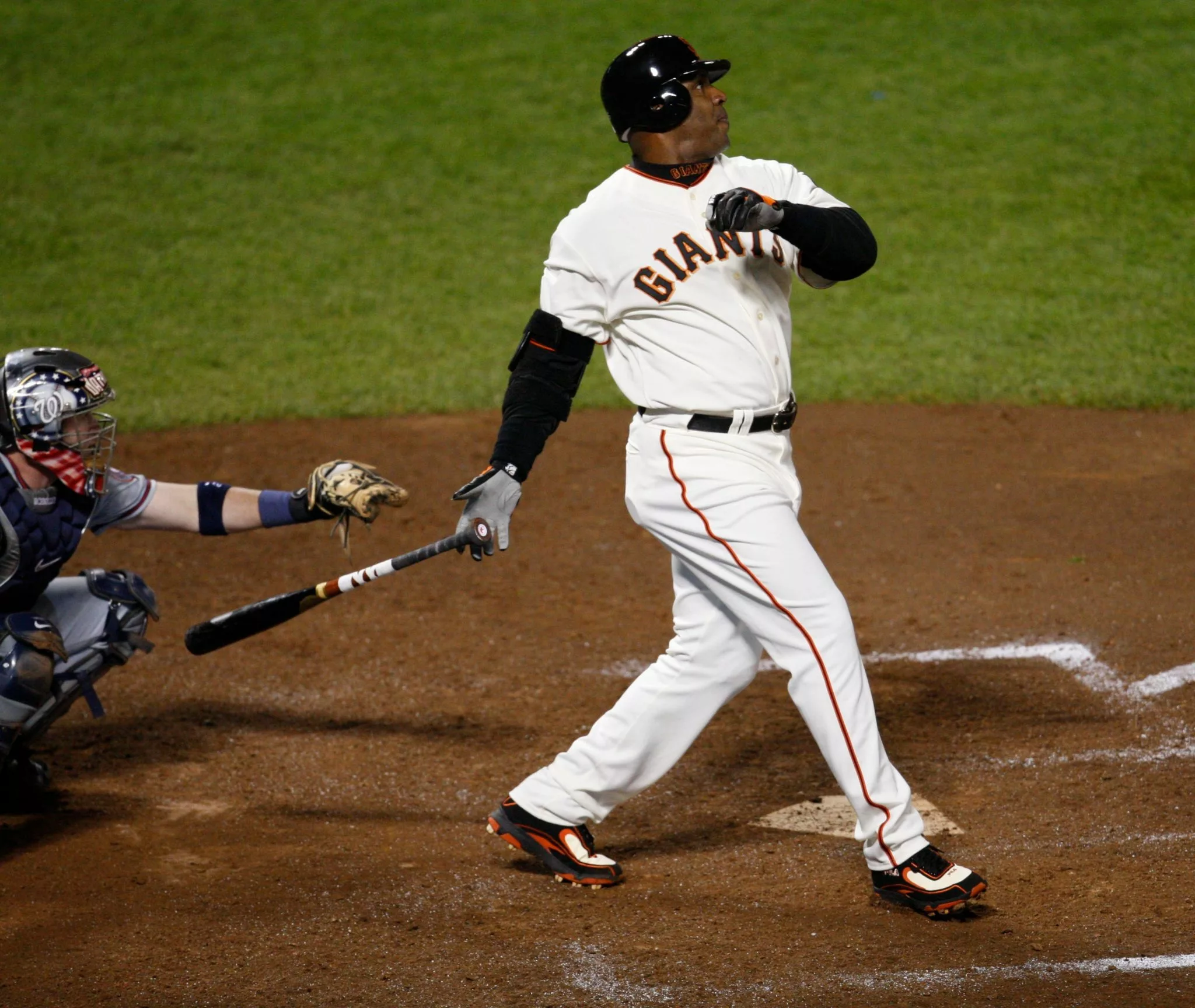
Few debates in baseball history generate more passion than comparing Babe Ruth and Barry Bonds. Both transformed the sport in different eras, yet each carries questions that make evaluating greatness difficult. Ruth dominated a game that existed a century ago, when many players spent their winters working construction jobs or other manual labor. He also competed in an era when Major League Baseball excluded African-American and many Latino players. Bonds, meanwhile, produced numbers that seem almost impossible, but his legacy remains forever tied to performance-enhancing drug allegations.
Comparing the two requires more than simply looking at statistics. It means weighing dominance against competition, talent against circumstance, and accomplishments against controversy. Let's examine what made each player extraordinary before looking at the criticisms surrounding their careers.
Babe Ruth
Babe Ruth revolutionized baseball in a way no player ever had before. During an era built around bunting, stolen bases, and small-ball tactics, Ruth completely changed the way the game was played. He didn't just lead the league in home runs—he overwhelmed everyone else.
Ruth became the first player to reach 30, 40, 50, and eventually an incredible 60 home runs in a single season. His power was so overwhelming that when he became baseball's career home run leader with his 138th homer, he was already creating a record that seemed impossible to match. By the time he blasted his 700th career home run, no other player had even reached half that total.
Despite his legendary appetite and carefree lifestyle, Ruth was also a remarkable athlete. His size often overshadows the fact that he possessed tremendous coordination, strength, and natural athletic ability that allowed him to dominate multiple aspects of the game.
Before becoming baseball's greatest slugger, Ruth was already one of the American League's elite pitchers. He compiled a 94-46 record with a sparkling 2.28 ERA, threw 17 shutouts, and established a World Series record with 18 consecutive scoreless innings that still stands today. Few athletes in professional sports history have ever reached elite status in two completely different roles.
Ruth's influence stretched well beyond the field. Following the devastating 1919 Black Sox scandal, baseball desperately needed a new face. Ruth's larger-than-life personality and unprecedented home run exploits helped restore public confidence in the game. Alongside heavyweight boxing champion Jack Dempsey, Ruth became one of the defining American sports icons of the Roaring Twenties.
Barry Bonds
Barry Bonds was a completely different type of superstar. Unlike Ruth, Bonds never embraced the spotlight with a charming personality. He was often viewed as distant, difficult, and confrontational with both the media and fans. Personality, however, has little to do with evaluating greatness on the baseball field.
As a player, Bonds was as complete as anyone the game has ever seen. He combined elite power with speed, patience, defense, and baseball intelligence. His eight Gold Gloves make a compelling argument that he belongs among the finest defensive left fielders in baseball history, while his 514 stolen bases demonstrate that he was much more than simply a power hitter.
Long before steroid allegations emerged, Bonds had already established himself as the premier player in baseball. He captured three MVP Awards before the controversy surrounding PEDs began and arguably deserved additional MVP honors during that period. His combination of offense, defense, and baserunning made him arguably the most complete everyday player of his generation.
Although Bonds finished with 2,935 career hits rather than reaching the celebrated 3,000-hit milestone, his extraordinary plate discipline tells another story. His record 2,558 career walks remain untouchable, leaving him hundreds ahead of second-place Rickey Henderson despite Henderson playing three additional seasons. Bonds' willingness to wait for the perfect pitch likely cost him some hits, but it also made him one of the most feared hitters baseball has ever seen.
The Case Against Babe Ruth
No player is immune from criticism, including Babe Ruth. The strongest argument against his greatness centers on the era in which he played.
Pitchers of the 1920s generally lacked the velocity, conditioning, and specialized training seen in modern baseball. Breaking pitches were less sophisticated, and Ruth never had to deal with today's sliders, splitters, or bullpens filled with relievers throwing nearly 100 miles per hour.
Even more significant is the issue of segregation. Major League Baseball excluded African-American players and many Latino stars throughout Ruth's career. While Ruth reportedly played numerous exhibition games against Black teams and performed extremely well, those contests cannot replace the challenge of facing elite competition over a 154-game season. The absence of many of the world's best players inevitably raises legitimate questions when comparing his accomplishments across eras.
The Case Against Barry Bonds
Barry Bonds' greatest obstacle in any historical discussion is impossible to ignore: performance-enhancing drugs.
Even without the PED allegations, Bonds benefited from playing during baseball's expansion era, when critics argue that the overall talent pool was spread more thinly than in previous generations. However, expansion is only a secondary argument.
The steroid controversy defines the debate. Whether fairly or unfairly, it casts doubt over his historic numbers and leaves baseball fans wondering how much of his unprecedented late-career production would have existed without pharmaceutical assistance. That uncertainty remains the biggest hurdle to placing Bonds unquestionably at the top of baseball history.
Conclusion
Bonds before the PEDS was the best player in baseball. Ruth did not have to play the best competition and there just may be a case to be made that because of that we are not sure if Ruth was the best when he played, but I will assume he was. It was not Ruth's fault he didn't face the best minority players, but nonetheless, he didn't. Ruth was the best pitcher and player in his day, but I believe Bonds was a complete player on the field outside of pitching. In the end, though the PEDS make this a hard case for Bonds to make because we don't know what his career would have been like if not for the PED use. I do know this he would not have hit over 70 Home Runs in a season without some pharmaceutical help. I am going to side with the Great Bambino here. Both players have significant drawbacks but how can you overlook a man that was the best Pitcher and Hitter in the game? I go with Babe Ruth!