
Dueling Prediction Market Legal Battles Ongoing in Arkansas

Mike Goodpaster Published 11/11/2026

There are dueling lawsuits on the docket in Arkansas. After Arkansas Attorney General Tim Green filed a lawsuit against Kalshi, rival prediction market sites Polymarket and OG.com countered with lawsuits of their own. In the Arkansas lawsuit, Green is arguing that a sports-event contract asking whether the Arkansas Razorbacks will win or lose is gambling, plain and simple. And that makes these sports-event contracts illegal, unlicensed sports betting.
Lawyers for Polymarket and OG.com are seeking to make a preemptive strike to prevent Green from coming after them. These suits are asking the court to rule that Arkansas can't enforce its state gambling laws against federally regulated derivative markets.
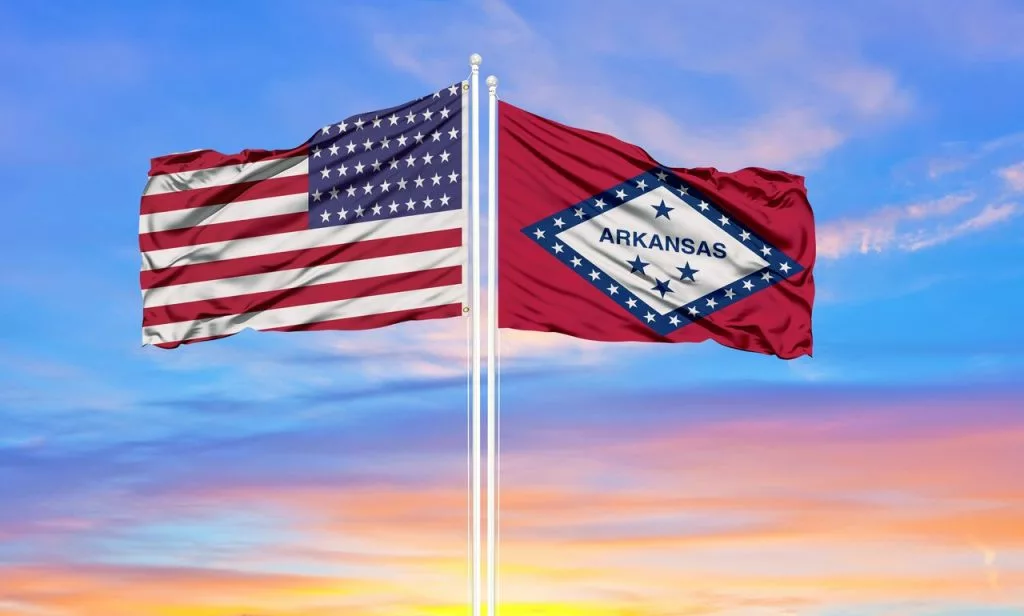
Arkansas calls Kalshi out for offering illegal gambling
Arkansas AG Green made his filing in Independence County. He's citing some of Kalshi's event contract offerings as being nothing more than cleverly camouflaged betting.
“Kalshi has built a global business that it calls a prediction market," Green said in a statement. "Allowing consumers to wager money on the outcome of just about anything. You can wager on the outcome of elections, reality competition shows, football games, and much more."
It's the sports-event contracts that Green is specifically choosing to pounce on in the state's lawsuit.
"It doesn’t take a genius to understand that wagering money on whether the Razorbacks win or lose is gambling," Green said. "And gambling on an unregulated platform is squarely prohibited by Arkansas law.
“That’s why I have brought this lawsuit ... to hold Kalshi accountable for multiple violations of the Arkansas Deceptive Trade Practices Act. The relief we are seeking includes restitution, penalties, taxes, and injunctive relief.”
If it walks like a duck ...
Green believes that Kalshi's language describing what the site offers is his best evidence. He views it as straightforward self-explanation that they operate as a gambling site.
“Although Kalshi insists that its products are not gambling, its actions speak louder than its labels," Green said. "Kalshi offers self-exclusion tools, deposit limits, trading breaks, and other tools commonly associated with gambling operators to help users stay in control of wagering activity.
"It promotes gambling addiction resources, including its own partnership with the National Council for Problem Gambling. Kalshi is not blind [to the fact] that its platform presents real, tangible risks to its users, including excessive wagering, financial losses, depression, and other mental health harms."
It's for these reasons that Green believes he has the goods on Kalshi to pursue legal action.
“Arkansas law is concerned with substance, not semantics, and in Arkansas, gambling is regulated to protect consumers," Green said. "Instead of obtaining the licenses, submitting to the oversight, complying with the restrictions, and paying the taxes required of lawful gambling operators in Arkansas, Kalshi opened its platforms to Arkansas consumers, including individuals as young as 18 years old, encouraged them to wager real money on sporting and entertainment events, and profited from those wagers."
Polymarket and OG.com quickly counter Arkansas lawsuit
In Old West terminology, you could say that Polymarket and OG.com are seeking to head off Arkansas at the pass. Both prediction market sites filed suit in federal court. Lawyers are arguing that the purpose of their suits is to serve as preemptive strikes. They seek to halt an inevitable filing against them by Green's office.
Lawyers representing OG.com, the prediction market site operated by Crypto.com, say they are seeking "injunctive relief to restrain the Office of the Attorney General of Arkansas and Commissioners of the Arkansas Racing & Gaming Commission from improperly and under color of Arkansas state law assuming jurisdiction over, regulating, or terminating OG .com 's listing of lawful derivatives contracts on its federally regulated market."
Polymarket is seeking declaratory and injunctive relief against expected enforcement from Arkansas.