
Mike D’Antoni’s Career Was Defined by a Willingness to Challenge Established Thinking

Jesse M. Cox Published 16/08/2026

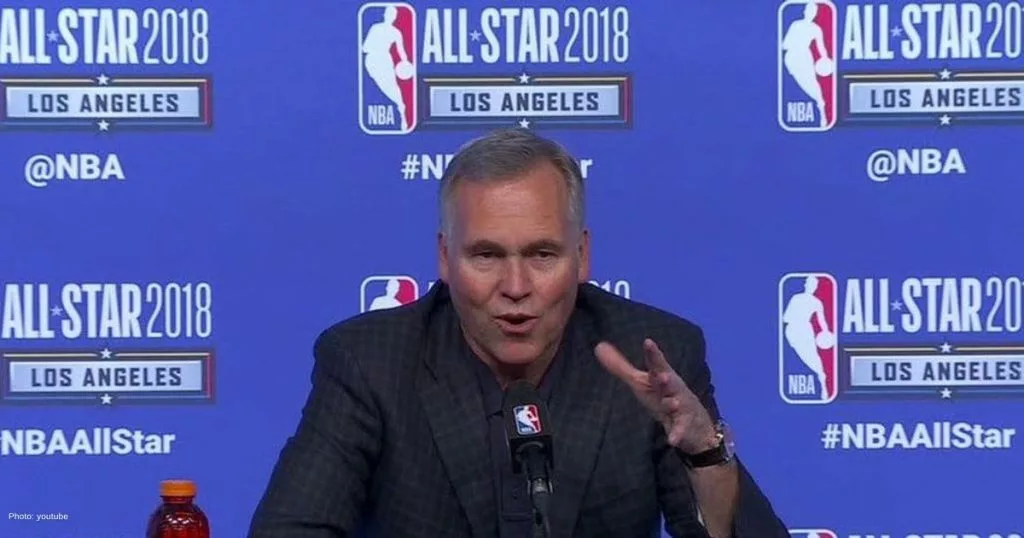
Mike D'Antoni's name is forever linked to "seven seconds or less," the fast-paced offense that helped reshape the NBA in the 2000s. But as D'Antoni joins the Naismith Basketball Hall of Fame Class of 2026, his legacy deserves a much broader look.
His NBA coaching career ended with a 672-527 regular-season record, two Coach of the Year awards and 10 playoff appearances. He also spent eight seasons coaching in Italy and later helped Team USA win Olympic gold medals as an assistant coach in 2008 and 2012.
Key Takeaways
Mike D'Antoni's coaching career, marked by his "seven seconds or less" philosophy, revolutionized the NBA with a fast-paced, player-driven offense that emphasized shooting, spacing, and flexibility.
- Mike D'Antoni's innovative "seven seconds or less" offense, pioneered with the Phoenix Suns, fundamentally reshaped NBA strategies by prioritizing pace, floor spacing, and three-point shooting.
- Beyond a fast-paced system, D'Antoni's coaching philosophy was characterized by empowering talented players, granting them freedom to create and operate within their strengths, as exemplified by his work with Steve Nash and James Harden.
- Despite not winning an NBA championship, D'Antoni's lasting legacy is evident in his significant influence on modern offensive schemes, player roles, and shot selection, earning him a place in the Naismith Basketball Hall of Fame.
The Phoenix Suns Started the Shift
D'Antoni's biggest breakthrough came with the Phoenix Suns. After taking over during the 2003-04 season, he led the team to a remarkable turnaround in 2004-05. Phoenix went from 29 wins to a franchise-record-tying 62 victories, earning D'Antoni his first NBA Coach of the Year award.
The Suns became known for playing quickly, but pace alone did not explain their success. With Steve Nash controlling the offense and Amar'e Stoudemire attacking the rim, D'Antoni surrounded his stars with shooters and created space for them to make decisions. Shawn Marion also played power forward despite being smaller than many traditional big men, giving Phoenix a faster and more flexible lineup.
That approach eventually became a foundation for modern NBA offense. Three-point shooting, floor spacing, pick-and-rolls and versatile lineups are now common across the league, but D'Antoni helped demonstrate how effective they could be when combined into one system. His influence continues to appear in NBA News whenever teams embrace similar offensive principles.
More Than a Fast-Paced System
The most important part of D'Antoni's philosophy was arguably his willingness to let talented players take control. Rather than forcing every possession through a rigid playbook, he gave Nash freedom to create and allowed his best players to operate in situations that suited their strengths.
His influence was not limited to Phoenix. The Suns went 253-136 during his five seasons as head coach, made two Western Conference finals and won three Pacific Division titles. Those results helped establish D'Antoni as a major figure in NBA awards and recognitions, even without a championship on his résumé.
D'Antoni later showed that his ideas could work with a completely different roster in Houston. After joining the Rockets in 2016, he built the offense around James Harden, giving the superstar extraordinary freedom and encouraging the team to take three-point shots at an unprecedented rate.
D'Antoni's Second Act in Houston
D'Antoni's partnership with Harden produced another defining chapter of his career. Harden became the league's leading scorer in three consecutive seasons under D'Antoni and led the NBA in assists during his first season with the Rockets. Houston also won 65 games in 2017-18, the best regular-season record in the league that year.
The Rockets reached the Western Conference finals that season and pushed the eventual champion Golden State Warriors to seven games. Their championship opportunity disappeared after Chris Paul suffered a hamstring injury, while Houston famously missed 27 consecutive three-point attempts late in the series.
A Legacy Still Seen Today
D'Antoni never won an NBA championship, but his influence reaches well beyond his playoff results. His teams helped accelerate a change in how coaches, players and front offices viewed shot selection, spacing and player roles. That impact gives his Hall of Fame induction significance beyond the usual NBA awards and recognitions.
For fans following NBA News, D'Antoni's Hall of Fame induction is a reminder that some of the biggest changes in basketball happen before they become standard practice. His methods once looked unconventional; today, many of them are central to the way NBA teams build offenses.
D'Antoni's place among NBA awards and recognitions reflects more than his trophies. His lasting impact on the game may be his greatest achievement. "Seven seconds or less" does not tell the whole story. D'Antoni changed how the NBA approached pace, spacing, shooting and player freedom.