
Amar’e Stoudemire’s Unlikely Path From High School to the Hall of Fame

Jesse M. Cox Published 14/08/2026

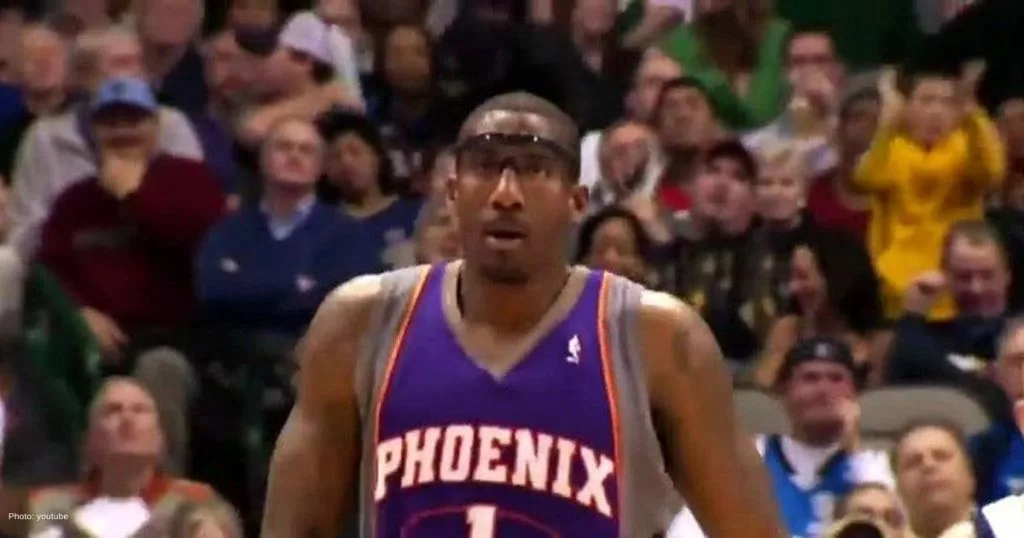
Long before becoming one of the NBA's most explosive NBA Players, Amar'e Stoudemire was an 18-year-old high school prospect with no college experience. Jerry Colangelo saw his strength, athleticism and confidence in the McDonald's All-American Game and quickly believed he was worth the risk.
Stoudemire's ambition also stood out. Even as a teenager, he dreamed of reaching the Basketball Hall of Fame, a goal he eventually achieved with his selection to the 2026 Naismith Basketball Hall of Fame class.
Key Takeaways
Amar'e Stoudemire's journey from a high school phenom with no college experience to a Hall of Famer highlights an ambitious path fueled by strategic maneuvering and exceptional talent.
- Jerry Colangelo and Amar'e Stoudemire's agent employed an unusual strategy of citing fictitious knee and shoulder issues to prevent rival teams from scouting him, ensuring the Phoenix Suns could draft him directly out of high school.
- Despite initial skepticism from teammates due to his lack of college experience, Stoudemire's raw athleticism, strength, and finishing ability immediately proved his readiness for the NBA.
- Stoudemire's exceptional rookie season, where he won Rookie of the Year and became the first high school player to do so, set the stage for a highly successful NBA career, solidifying his legacy with the Phoenix Suns and ultimately leading to his Hall of Fame induction.
Phoenix found a way to keep him available
The Suns faced one major problem before the 2002 NBA Draft: Colangelo wanted Stoudemire, but he did not believe the teenager would still be available with the ninth pick. Other teams had the opportunity to see him and potentially discover the same combination of size, speed and power that had impressed Phoenix.
Colangelo turned to Stoudemire's agent, Herb Rudoy, and the two came up with an unusual solution. Rudoy told other teams that Stoudemire could not work out because of supposed knee and shoulder problems, helping keep the young prospect away from rival scouts.
The strategy worked. Stoudemire remained on the board, and Phoenix selected him ninth overall on June 26, 2002. He was the only player drafted directly from high school that year.
The pick was considered a gamble by many observers, especially because Stoudemire had no college experience. Phoenix, however, believed it had found a potential star. The organization soon learned that his physical gifts translated to the professional level far better than expected.
From raw prospect to franchise star
Stoudemire's arrival initially left some Suns players wondering how a teenager could handle the NBA. Center Jake Voskuhl was surprised by Stoudemire's size and strength when he first saw him at summer workouts. Casey Jacobsen had a similar reaction, questioning how someone who had recently played high school basketball could immediately compete with experienced professionals.
Those doubts disappeared once Stoudemire stepped onto the practice court. His explosiveness, strength and ability to finish above the rim immediately separated him from other young players. Veteran Scott Williams also took Stoudemire under his wing, providing the type of guidance that could help the teenager adjust to the demands of professional basketball.
A rookie season that changed everything
Stoudemire began the 2002-03 season coming off the bench, but injuries to veteran Tom Gugliotta eventually opened a starting role. He quickly became one of the league's most dangerous young players, using his combination of power and athleticism to attack the basket.
On Dec. 30, 2002, Stoudemire produced 38 points and 14 rebounds against Kevin Garnett and the Minnesota Timberwolves. His performance confirmed that he was not simply surviving in the NBA; he was already capable of challenging established stars.
Stoudemire appeared in all 82 games during his rookie season, posting averages of 13.5 points, 8.8 rebounds per game. He won Rookie of the Year over Yao Ming, becoming the first player drafted directly from high school to earn the award.
A lasting legacy in Phoenix
Stoudemire's rookie season became the foundation for a much bigger career. During eight seasons with Phoenix from 2002 to 2010, he averaged 21.4 points and 8.9 rebounds while shooting 54.4% from the field. He made five All-Star teams and earned four All-NBA selections with the Suns.
His career later included time with the Dallas Mavericks, New York Knicks, and other teams, but Phoenix remained central to his legacy. His No. 32 jersey was retired by the Suns, and he was added to the organization's Ring of Honor in 2024.
For today's NBA News audience, Stoudemire's story remains a reminder of how quickly a young prospect can change expectations. Among NBA Players, few draft-day gambles have produced such a dramatic return: Phoenix took a chance on an untested teenager, and that teenager ultimately became a Rookie of the Year, six-time All-Star, five-time All-NBA selection and Hall of Famer.